Free 30-day trial inside the app (the current offer may vary by platform and store), then a weekly or yearly subscription. Educational guidance only.
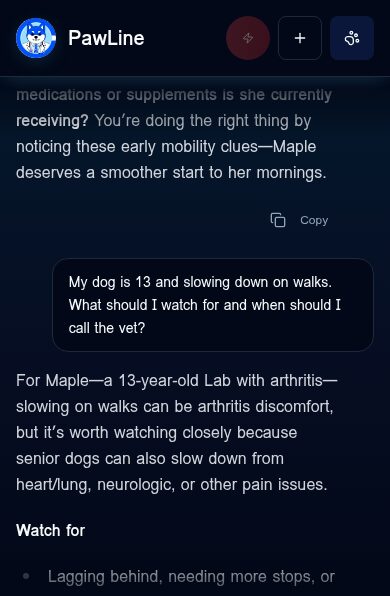
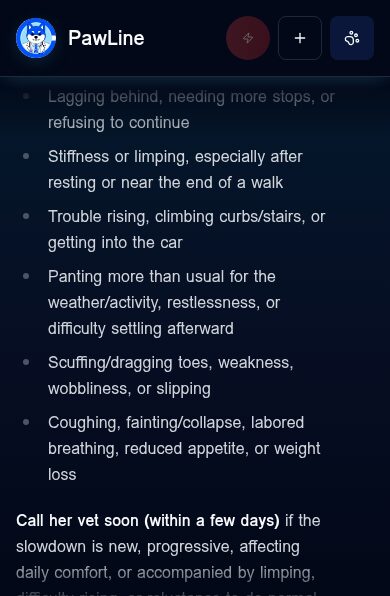
PawLine app, demo pet. Real app answer, not reviewed by a veterinarian.
Short versionAn older pet’s changes are slow, so they are easy to miss. A written record of appetite, weight, mobility, medications and mood makes vet visits more useful. The Gray Muzzle Ledger shows what is worth writing down and why.
Keep your senior pet’s whole story in your pocketPawLine keeps a health profile, daily notes and medication schedule for each pet, and lets you email the records to your vet.Every good day, on the record. Free to download. Try it free, no payment info needed, then decide after the trial.What is PawLine? An AI-powered pet health app whose answers draw on published veterinary research, including sources like PubMed. Ask health questions any hour, get emergency triage and first-aid steps, set medication reminders, keep a profile and daily notes for each pet and email them to your vet, and find nearby vets. Try it free for 30 days with no payment info needed; after the trial, continued access is an in-app purchase (weekly or yearly). Guidance only, not a diagnosis.
Senior pets often have several concerns at once, and the vet has about one appointment to sort them out. The AAHA senior care guidelines describe a thorough history as the foundation of a senior visit: eating and drinking, exercise and movement, play, elimination, attitude, grooming, vision and hearing, and any changes at home.
A log you keep day to day answers those questions with dates instead of guesses.
Ask about what you are seeing, with your senior dog in mind
Pick your older dog or cat in the app, describe the change, and get an answer that names them and tells you what to watch for and when to call the vet. Then keep the notes where the vet can see them.
The demo pets are fictional. Answers are general information, not veterinary advice.
Appetite, water intake, weight, mobility, sleep, bathroom habits, mood, and every medication or supplement, with dates. Bring notes and short videos to the vet.
Sources
2023 AAHA Senior Care Guidelines for Dogs and Cats (PDF) https://www.aaha.org/wp-content/uploads/globalassets/02-guidelines/2023-aaha-senior-care-guidelines-for-dogs-and-cats/resources/2023-aaha-senior-care-guidelines-for-dogs-and-cats.pdf
AAHA: Evaluating the healthy senior pet https://www.aaha.org/resources/2023-aaha-senior-care-guidelines-for-dogs-and-cats/evaluating-the-healthy-senior-pet/